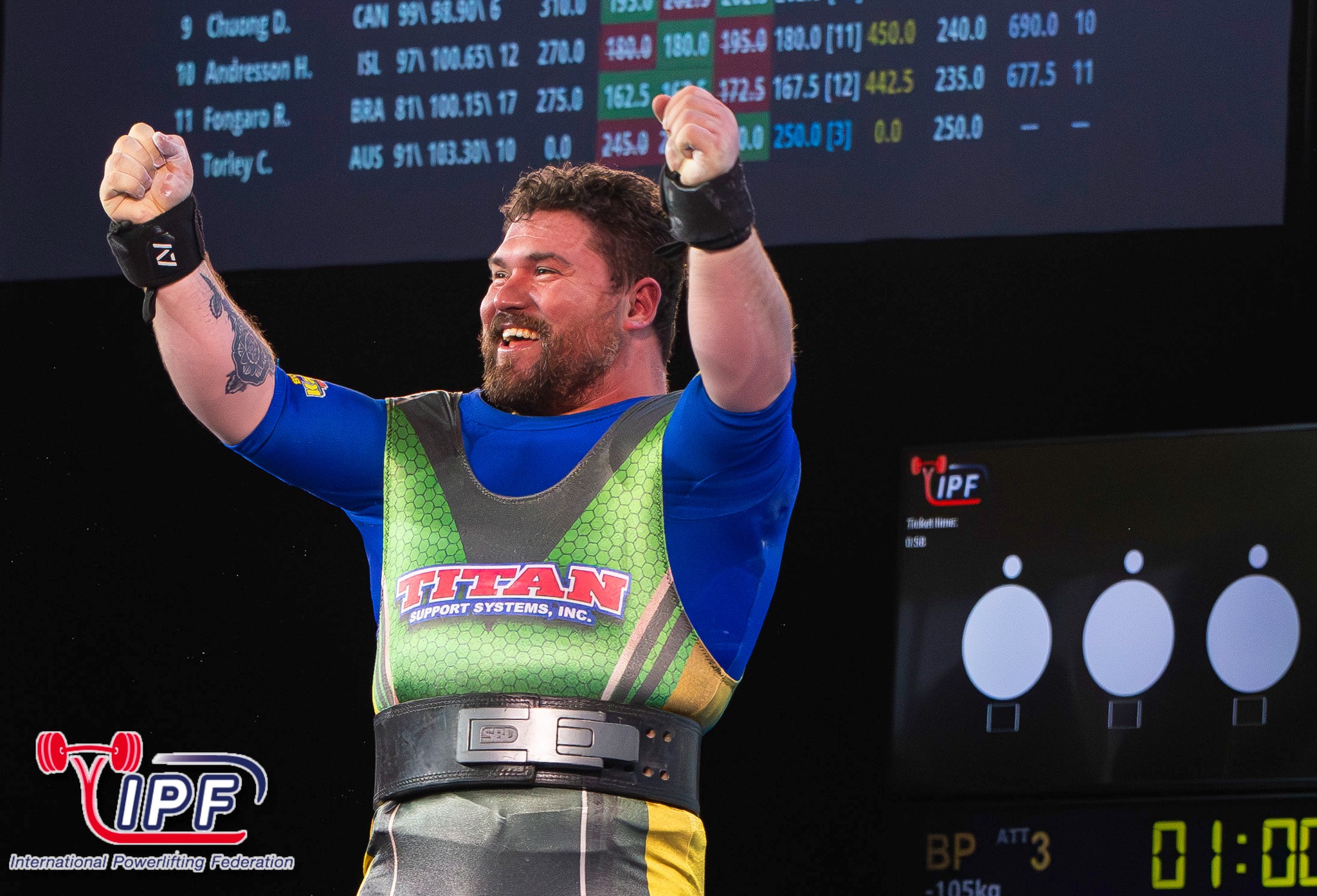
Referee Ruling System — RefereeLights
RefereeLights is a system that allows referees to rule on powerlifting competitions.
- 99,9%
- Disponibilità raggiunta in produzione
- 3x Più Veloce
- Elaborazione dati vs sistema legacy
- 50%
- Riduzione dell'inserimento manuale dei dati
- Multi-Piattaforma
- Distribuzione su web e mobile
Info sul Cliente
The International Powerlifting Federation is an international governing body for the sport of powerlifting as recognized by the General Association of International Sports Federations (GAISF). The goal of the IPF is to ease the process of powerlifting competitions and to make it more efficient and fair for all participants by having a system that can be used by all IPF affiliated members.

La Sfida
Sfida 1
Developing a standalone system that operates independently yet integrates seamlessly with other platforms when needed.
Sfida 2
The system must be highly customizable, allowing rule modifications and new feature additions without incurring extra costs or causing delays.
Sfida 3
Ensure accessibility and an intuitive user experience, particularly for referees and jury members, enabling efficient interaction and decision-making.
La Nostra Soluzione
Refereelights
It was clear that for this system and after analyzing the requirements, a web application would be the best solution using web sockets for near real-time communication between the referees and the system. Both locally and if made available online this would be a reliable solution.
As the goal was it to have mainly local usage we were using raspberry pi to host both the wireless network and the web application. The raspberry pi was properly configured to remove any manual configuration launching immediately the system and showing the result screen.
An android application was also developed which simplifies the usage of the system by the referees and jury members while connected to the systems network.
The system has:
- Jury Overruling & Hold competition Signal
- Timer with sound signals (mostly used for local competitions)
- Referee Ruling per referee
- A dashboard with customisation possibilites
- Intergration with Liftingcast online competition platform
Impatto e Risultati
Since the start of the project 55 units were created and delivered to the IPF affiliated members all over the world.
10 Updates have been made to the system since the start of the project to extend it with features and more to come!
Further integrations with competition system platforms are planned to have a local system which is not dependent in case of problems.
10 Updates have been made to the system since the start of the project to extend it with features and more to come!
La Nostra Metodologia
Abbiamo seguito una metodologia di sviluppo iterativa con feedback continuo degli stakeholder, assicurando che ogni rilascio soddisfacesse gli standard rigorosi dell'arbitraggio in competizioni internazionali.
Parere dell'Esperto
"RefereeLights dimostra come la tecnologia moderna possa trasformare l'arbitraggio sportivo. Combinando l'elaborazione dati in tempo reale con interfacce intuitive, abbiamo realizzato una piattaforma che serve atleti e ufficiali in molteplici discipline."
Implementazione Tecnica
Architettura
RefereeLight runs as a Node.js/Express.js server deployed on a Raspberry Pi, which simultaneously hosts a Wi-Fi access point for the local competition network. WebSocket connections (via Socket.io) push referee decisions to a central display in under 100 ms, with no dependency on an external internet connection. The Raspberry Pi is pre-configured to auto-launch the application on boot, meaning zero manual setup is required at competition venues. An Apache Cordova wrapper packages the referee interface as a native Android APK, allowing any Android phone on the local network to act as a referee controller.
Funzionalità Chiave
- Real-time WebSocket Communication — sub-100 ms ruling propagation across all referee devices and the main display screen
- Local Network Independence — fully operational without internet access; the Raspberry Pi hosts both the Wi-Fi network and the application server
- Android Mobile App — Apache Cordova-packaged APK for referee and jury member controls, replacing proprietary hardware controllers
- Jury Overruling & Competition Hold — dedicated signals for jury intervention and competition pause, matching IPF rulebook requirements
- Liftingcast Integration — optional online platform sync for federations that broadcast live competition results
Tecnologie Utilizzate
Since partnering with Obsidiancorps for this project, we've solved numerous challenges with a system that's fast, adaptable, and runs independently on local devices. If a phone breaks, there's no hassle we can simply switch to another device, even our personal phones. Previously, a broken controller meant replacing the entire system or we had constantly connection issues, but now, we have a solution that is both flexible and resilient."
Lessons Learned
Offline-First Design Produces More Resilient Competition Systems
Designing for zero internet connectivity from day one eliminated an entire category of failure modes. Venues across the world — from rural competition halls to international arenas — vary enormously in Wi-Fi quality, yet every RefereeLight unit operates identically because it carries its own network and server. This constraint forced cleaner architecture and ultimately made the system more reliable than cloud-dependent alternatives would have been.
Hardware Constraints Drive Better Software Decisions
Working within the limited CPU and RAM of a Raspberry Pi 3/4 pushed the Node.js server to stay lightweight and event-driven. Socket.io's efficient binary framing was preferred over heavier HTTP polling, and the front-end was kept free of bulky frameworks. The result is a system that handles 6 simultaneous WebSocket clients (3 referees, 1 jury, 1 display, 1 admin) with negligible CPU load — a quality that also benefits deployments on newer hardware.
Cross-Platform WebSocket Behaviour Requires Explicit Testing on Target Devices
WebSocket reconnection behaviour differs significantly between desktop browsers and Android WebViews inside a Cordova APK. Early versions suffered silent disconnections on Android when the app was backgrounded, causing referees to miss ruling windows. The fix required explicit heartbeat/ping-pong logic and foreground-service hints in the Cordova wrapper. Testing solely on desktop would have missed this entirely — target device testing became a mandatory step in every release cycle.