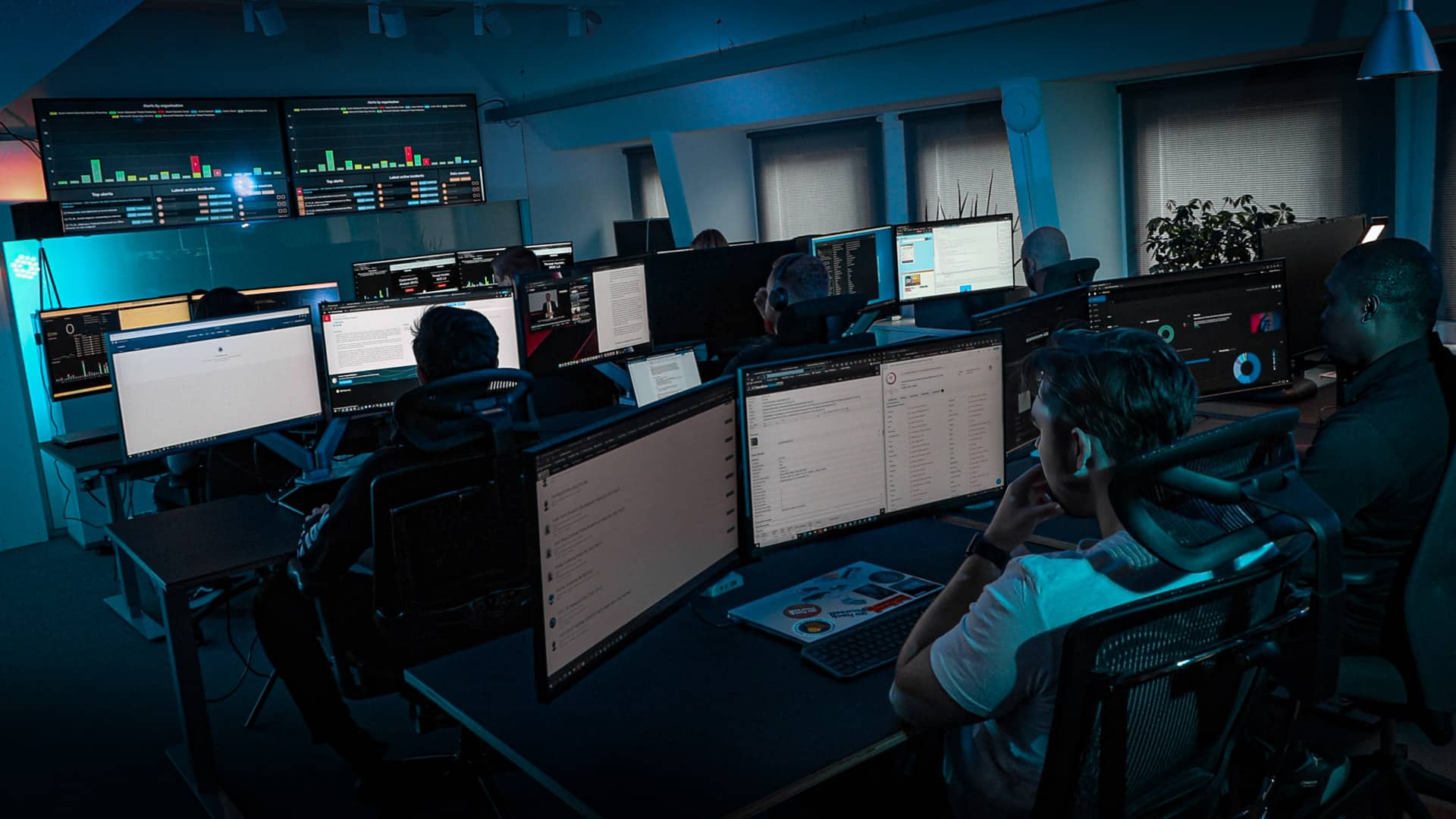
Human dynamics under cyber crisis pressure
DCAF – Geneva Centre for Security Sector Governance
Interactive nonverbal communication training followed by a structured, anonymized assessment of how participants communicated, led, collaborated, and made decisions during a simulated cyber crisis.
- 2 phases
- Awareness building followed by live behavioral observation
- Live exercise
- Communication assessed as the crisis scenario evolved
- Anonymized
- Feedback delivered without identifying participants
- Development-led
- Strengths reinforced and mistakes transformed into learning
About the Client
Strengthening the human side of cyber crisis response
Effective cyber crisis management depends on more than technical expertise. Teams must interpret incomplete information, establish leadership, coordinate across functions, and communicate under pressure while uncertainty continues to evolve.
As part of a DCAF capacity-building initiative, ObsidianCorps was engaged to build awareness of nonverbal communication and then observe those dynamics during a realistic incident and crisis exercise. The goal was to understand how the team reached decisions—not only whether the final technical decision was correct.
- Industry
- Security sector governance and capacity building
- Engagement scope
- Cyber crisis communication and behavioral assessment

The Challenge
Making the human dynamics behind crisis decisions visible
Procedures and technical actions are easy to document. The hierarchy, hesitation, confidence, bias, and group behavior shaping those actions are harder to see—and can determine whether vital information reaches the right people.
Communication changes under pressure
Incomplete information, time pressure, and uncertainty can alter how people speak, listen, challenge assumptions, and respond to disagreement.
Hierarchy can hide useful information
Confident or senior voices may dominate while quieter participants hold relevant information but struggle to enter the discussion.
Observation must not disrupt behavior
The assessment needed to capture individual and group patterns while allowing the exercise to unfold naturally.
Our Solution
Awareness first, observation second
The engagement linked practical learning with real-time observation so participants could first understand nonverbal communication and then see its relevance within a demanding crisis scenario.
Interactive nonverbal communication session
Participants explored how people communicate beyond words through demonstrations and practical exercises. The session avoided simplistic body-language claims and emphasized context, behavioral baselines, clusters of signals, and changes over time.
- Posture, gestures, and facial expressions
- Eye contact, positioning, and interpersonal distance
- Levels of engagement and reactions to others
- Context-aware interpretation instead of isolated signals
Behavioral observation during a cyber crisis exercise
As the simulated incident evolved, ObsidianCorps observed recurring patterns that could influence communication, coordination, and decision-making during a real crisis.
- Leadership emergence and participation levels
- Information sharing across hierarchy and functions
- Reactions to uncertainty, challenge, and mistakes
- Alignment between verbal statements and nonverbal behavior
Individual behavior in the context of the whole team
The assessment distinguished temporary reactions from recurring patterns and examined how group structure influenced whose information received attention. This included the effect of confidence, tone, posture, seniority, familiarity, and communication style on collective decisions.
- Who assumed leadership and how the group responded
- Whether quieter participants could contribute relevant information
- How hierarchy affected challenge and alternative viewpoints
- How the group adapted as pressure and uncertainty increased
A development-focused assessment, not a search for blame
Positive leadership, collaboration, adaptability, initiative, information sharing, and mutual support were identified first and reinforced. Communication breakdowns and mistakes were then examined as practical learning opportunities, supporting candid reflection without making participants afraid to act.
“What happened, why did it happen, and how can the team become stronger because of it?”
What conditions contributed to the difficulty?
How did the team respond?
What positive behaviors helped mitigate it?
What could be done differently in a future crisis?
From observation to practical improvement
ObsidianCorps consolidated the exercise observations into a structured assessment of the group’s behavioral and communication performance, with recommendations that teams could apply to future crisis-response preparation.
- Recurring behavioral and communication patterns
- Leadership, participation, and group interaction
- Responses to stress, uncertainty, and challenge
- Potential communication and behavioral biases
- Positive behaviors and team strengths
- Practical areas for stronger crisis coordination
Impact & Results
A broader view of crisis-response capability
The engagement showed how behavioral analysis and nonverbal communication can deepen cybersecurity exercises. Technical plans remain essential, but their success also depends on people sharing information, challenging assumptions, managing uncertainty, supporting colleagues, and adapting under pressure.
How did the team arrive at that decision?
What worked well?
What made the response more difficult?
What can be strengthened before the next crisis?
Prepare the people behind your crisis-response plan
Combine realistic cyber exercises with constructive observation of communication, leadership, and decision-making under pressure.