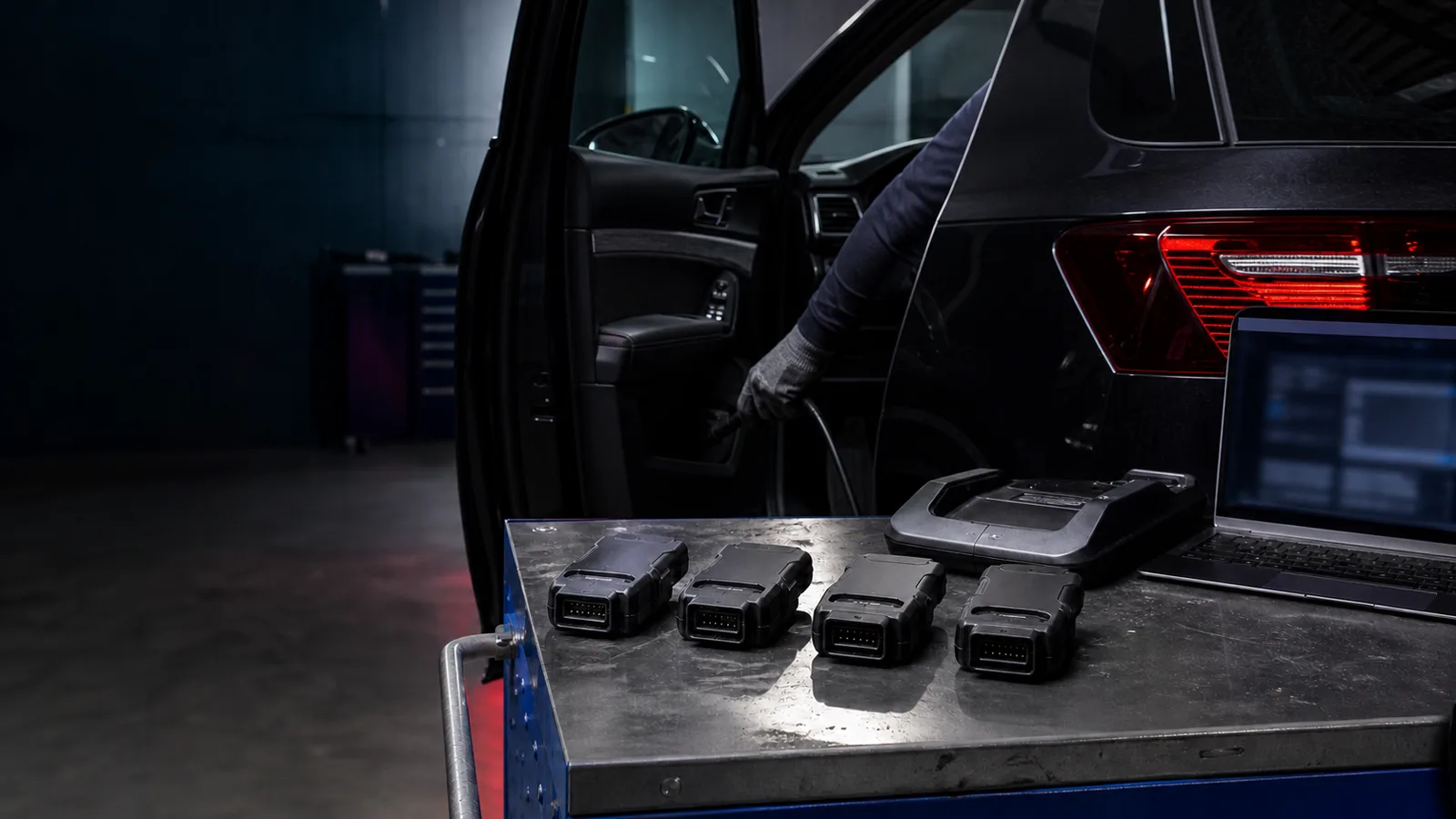
Recovering four undetected VAS 6154 diagnostic interfaces
When standard recovery no longer reached the devices, we traced the failure across the interfaces and their workshop environment, then turned that understanding into a controlled recovery process.
- 4 devices recovered
- Four interfaces with the same observed failure state returned to service.
- ≈20 hours
- Approximately 20 hours of specialist analysis and engineering.
- ODIS verified
- Verified through ODIS on a vehicle.
- One bounded workflow
- The specialist intervention became a controlled, repeatable operator process.
An authorized SEAT workshop had four VAS 6154 interfaces showing the same abnormal behaviour. They were no longer detected by the usual diagnostic environment, and the standard reset path had not returned them to service. The work required analysis and understanding—not repeated trial-and-error attempts.
About the Client
An authorized workshop with four unavailable interfaces
The client is an authorized SEAT workshop that depends on genuine diagnostic equipment for vehicle servicing. Its identity remains confidential, but the operational problem was clear: four interfaces with the same failure pattern could not be selected in the normal workshop workflow.
- Industry
- Authorized automotive workshop
- Specialist diagnostic engineering
- Genuine VAS 6154 equipment in an authorized diagnostic environment
The Challenge
The warning lights were symptoms, not a diagnosis
The normal path had stopped working
The interfaces showed abnormal LEDs and an audible warning, repeatedly restarted, and no longer appeared where technicians normally select or test them. A factory reset had not resolved the condition.
Several faults can look the same
Hardware damage, cabling, configuration, software compatibility, and recoverable internal state problems can all present as a missing interface. Treating the visible symptom as the cause would have risked the wrong intervention.
The environment mattered too
The interfaces could not be assessed in isolation. Device behaviour, the Windows workstation, the licensed diagnostic environment, connections, and independent verification all had to be considered together.
Diagnosing the system—not just the device
Obsidiancorps correlated the devices’ startup behaviour with evidence from the workshop environment and separated the shared failure state from other plausible causes. That work identified a narrow recovery opportunity after the standard procedure had failed.
- Compared the common behaviour across all four affected interfaces
- Distinguished a recoverable state from connection, configuration, compatibility, and suspected hardware faults
- Defined evidence that would stop the intervention and require escalation instead
- Required independent recognition in ODIS before counting a device as recovered
Our Solution
From specialist understanding to a controlled workflow
Once the failure state was understood, we engineered a guarded recovery utility for the workshop’s authorized environment. The underlying method remains proprietary; the public value lies in the diagnostic judgment, operational controls, and verifiable outcome built around it.
Confirm the right case
Preflight checks ensure the observed device and workshop environment match the supported scenario before any recovery begins.
Guide the operator
Clear warnings, stop conditions, and a bounded sequence help a workshop technician carry out the intervention consistently.
Protect the environment
Temporary workstation changes are controlled, the procedure records what happened, and cleanup is part of the workflow rather than an afterthought.
Verify independently
A progress message is not accepted as proof. Each interface must return to its expected state and be recognized through the workshop’s diagnostic system.
Impact & Results
Four devices returned to service
After approximately 20 hours of analysis and engineering, the controlled process was applied to the four interfaces that shared the failure state. All four were recovered and then verified through ODIS while connected to a vehicle.
What the result establishes
- Four affected interfaces with the same observed issue were recovered
- ODIS recognized the recovered interfaces in an on-vehicle check
- The outcome was confirmed in the authorized workshop environment
- No universal recovery-rate or compatibility claim is made beyond these four devices
Seeing the same VAS 6154 symptoms?
A VAS 6154 that is missing from ODIS after the standard reset path may justify specialist analysis, but similar symptoms do not guarantee the same cause. We can help authorized workshops and diagnostic-equipment teams determine whether a controlled recovery is appropriate.
A bounded intervention, not a generic repair recipe
The work does not cover clone interfaces, unrelated diagnostic hardware, unsupported workshop environments, or confirmed physical damage. Suspected hardware faults and unresolved cases should follow the appropriate official support route.
Have a diagnostic problem the standard procedure cannot explain?
Bring us the symptoms, the environment, and the evidence. We will help you separate device failure from a recoverable system state and design a controlled next step.